Welcome to Melltorp's official website!
Dubai, the luxury capital of the Middle East, has a home furnishing market that brings together high-end furniture and design concepts from around the world. When choosing a sofa, in addition to its appearance, it must be suitable for the local hot and dry climate, adapt to the culture of frequent gatherings, and take into account the humidity changes in the indoor air-conditioned environment. A practical and comprehensive buying guide that can help you accurately find a sofa that is both durable and comfortable, and perfectly matches the style of your home among the many choices.
In Dubai's hot climate, the material of the sofa plays a direct decisive role in its service life. Natural first-layer cowhide has good air permeability and is extremely wear-resistant. The pores on its surface can adapt to changes in indoor and outdoor temperature differences, and are not prone to cracking due to dry conditions. However, genuine leather needs to be maintained regularly with special care oil and protected from direct sunlight. High-density technical cloth has become a popular choice in recent years. It has a texture similar to real leather, but is easier to clean. Its waterproof and anti-fouling properties are excellent, making it very suitable for families with children or pets.
The linen and cotton blended fabric is breathable and cool, but its stain resistance is not good. In Dubai's sandy and dusty conditions, frequent vacuuming is required. If you are pursuing top-notch comfort, velvet material, although gorgeous, can easily absorb dust and static electricity, making cleaning and maintenance costs high. After comprehensive consideration, top-layer yellow cowhide and high-performance technical fabric are the two materials most suitable for long-term use in Dubai families. The former can highlight luxury, while the latter takes into account practicality and cost-effectiveness.
When buying sofas in Dubai, distinguishing between full leather, semi-genuine leather and imitation leather is a course that must be mastered. Full leather means that all the surfaces on the sofa that come into contact with the human body are natural cowhide. It is expensive, but has a warm texture and very good breathability. Semi-genuine leather is to use genuine leather only in main parts such as seat cushions and backrests, and replace the sides and back with imitation leather. This solution is the most common in Dubai's mid-to-high-end market, which can control the budget without sacrificing the core touch. Although imitation leather is cheap, it is prone to aging and falling off under high temperatures and is not recommended for long-term use.
When checking the quality of genuine leather, first check whether the surface texture is natural. The pores and scars of all genuine leather cannot be exactly the same. Press it with your fingers, and the high-quality cowhide will form fine and even radial wrinkles, which will quickly return to its original shape after being loosened. Gently scratching the inside with your fingernail and leaving no visible marks shows that the coating is just right. You can also get closer and smell the smell. Genuine leather has a faint smell of animal fat, while imitation leather exudes the smell of chemical glue. In furniture shopping malls in Dubai, be sure to ask for material descriptions and samples to avoid being misled by low-priced "genuine leather" gimmicks.
The big difference is between apartments and villas in Dubai. The first step in choosing the size is to measure the space. First, determine the length of the sofa background wall. It is usually recommended that the length of the sofa occupies two-thirds to three-quarters of the wall, leaving at least 60 cm of walkways on both sides. The key comfort indicator is the seat depth: a person with a height of about 170 cm can sit with a depth of 50 to 55 cm to lean back naturally; if it is more than 60 cm, a lumbar pillow is required. A backrest height lower than 70 cm is suitable for casual chatting, while a backrest height higher than 80 cm provides better neck support.
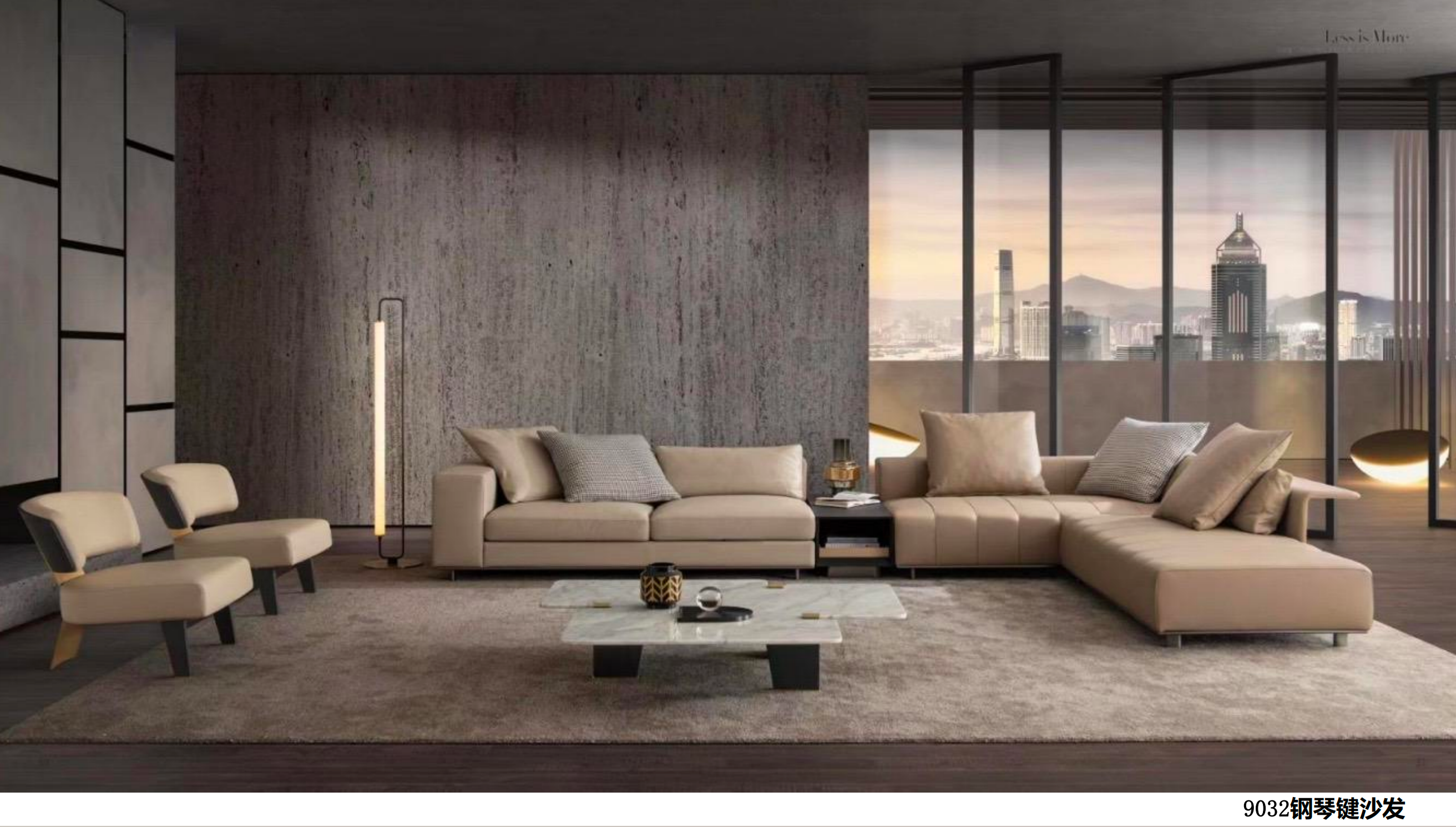
As for the large open-plan floor that is common in Dubai, L-shaped or modular sofas can effectively divide functional areas, and the length of the corner position should be more than 180 cm to comfortably lie down. If you want a long and narrow living room, choosing a thin and light sofa with thin metal legs can reduce visual congestion. Don’t forget to measure the dimensions of the elevator and corridors. Many elevator doors in Dubai’s high-rise apartments are less than 90 centimeters wide. Large sofas may need to be disassembled or hoisted. You must confirm the delivery plan with the merchant in advance.
It is the Dubai area that has a home style that combines modern simplicity, Arabian luxury and Mediterranean resort style. When showing the modern style, the first thing to choose in the living room is a straight-line sofa with clean lines. The colors are mainly off-white, light gray or sand. Then, when paired with an abstract hanging painting and a metal floor lamp, it can create the feeling of an urban elite. And if someone prefers the traditional Arabic style, then it is recommended to choose a low sofa with a large depth and a large number of velvet or embroidered pillows. The main colors are burgundy, sapphire blue or amber, and then cover it with a carpet with geometric patterns.
For seaside apartments, rattan sofas or light-colored linen sofas are most suitable to echo the holiday atmosphere. Matching them with blue and white stripes and adding green plants will make it look refreshing and natural. No matter which style you choose, you must keep in mind the matching principle, that is, the sofa is the visual focus of the living room. Its color should be darker than the wall, but lighter than the floor, or it should create a moderate contrast with the main wall. In Dubai, many showrooms can provide free 3D design services. You can bring the floor plan and let the designer simulate the effect of the matching to prevent you from finding out that it does not fit in after you buy it at home.
After unpacking, you should first check the accessories list, check whether the leg pillows and hardware are complete, and make sure that the sofa fabric is not damaged or stained. During installation, be sure to make the sofa legs bear even force. If the ground is uneven, use adjusting foot pads to level it. Otherwise, long-term use will cause the frame to deform. If it is a modular sofa, the buckles should be connected in order from the middle to both sides. Only when you hear a "click" sound is it tightened. In the high temperature environment of Dubai, the sofa should be allowed to stand for 12 hours before use after transportation, so that the internal sponge and spring can regain their elasticity.
During daily maintenance, use the soft-bristled brush head of a vacuum cleaner to clean the dust in the gaps every week to prevent hard objects from scratching the surface of the leather. Apply mink oil or professional leather care agent to leather sofas every six months. Use a neutral detergent and a damp cloth to wipe technical cloth fabrics. After spilling a drink, wipe it up immediately with a dry towel and never rub it. In the summer in Dubai, keep the sofa as far away from the air conditioning outlet as possible. Excessive alternation of hot and cold temperatures will accelerate the aging of the material. A humidifier with a constant humidity function can also help the dermis maintain its toughness.
Which detail do you think is most easily overlooked when choosing a sofa in Dubai? You are welcome to share your practical experience in the comment area, and like and forward this guide to help more friends avoid the pitfalls of purchasing.