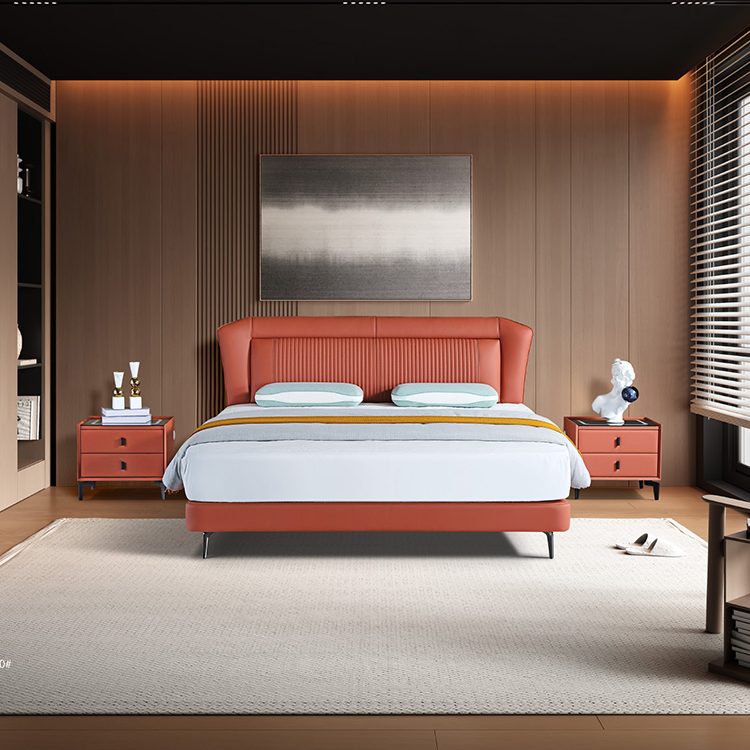
Welcome to Melltorp's official website!
For many people, choosing an Italian sofa is not just about adding a piece of furniture to their home, but also an investment in the quality of life. As a classic type in the international home furnishing market, Italian sofas have a high reputation in terms of design and craftsmanship. However, when many buyers are faced with many issues such as materials, craftsmanship, and size when actually purchasing, they often feel that they do not know where to start. This guide will focus on objective analysis around material identification, structural safety and space adaptation, helping you to be more confident when purchasing.
The question that many consumers are most concerned about when choosing is "whether it is actually imported." In fact, determining the "origin" of a sofa cannot just rely on the label. Real Italian sofas all have strict standards for leather materials, sponges, and spring systems. For example, the back of leather should have a natural fiber feel rather than uniform industrial embossing. The stitching should be uniform in density and there should be no slack or jumpers at the corners. Regular imported items usually come with the original product card and material description, which are the key basis for judgment.
Another detail that is easily dismissed as dispensable is the sitting experience. Many replica products only imitate the external appearance, but do not fully grasp the internal structural technology. You can try to press the seat cushion and backrest with your hands to feel the speed and strength of the rebound. The sofa is actually produced according to high standards. The sitting feeling is "soft at first and then hard". It not only has a sense of wrapped support, but also does not cause the body to sink in. During the design process, we also paid attention to the logic of sitting feeling that conforms to the curves of the human body, which is also consistent with the comfort concept pursued by Italian sofas.
The most classic fabric choice for Italian sofas is leather. However, there are great differences between different grades of leather. Common ones include painted leather, semi-aniline leather and aniline leather. Among them, aniline leather retains the original pores and texture of leather and has the best breathability. However, daily It requires relatively careful care, and it is more pragmatic to choose semi-aniline leather for home use. While retaining the natural texture, the surface has been lightly treated and has stronger stain resistance. It should be noted that low-quality leather often has too regular surface textures and feels plasticky.
In addition to checking the leather, you should also pay attention to whether the materials used on the contact surface and non-contact surface of the sofa are the same. Some products use artificial leather on the back or sides to cut costs. Over time, significant color difference or cracking will occur. You can look under the sofa or behind the backrest, touch it and smell it. High-quality leather should have only a faint smell of the leather itself after treatment, rather than a pungent chemical smell. During long-term use, the toughness of the leather also plays a decisive role in the service life of the sofa. This is worth investing more time to compare.
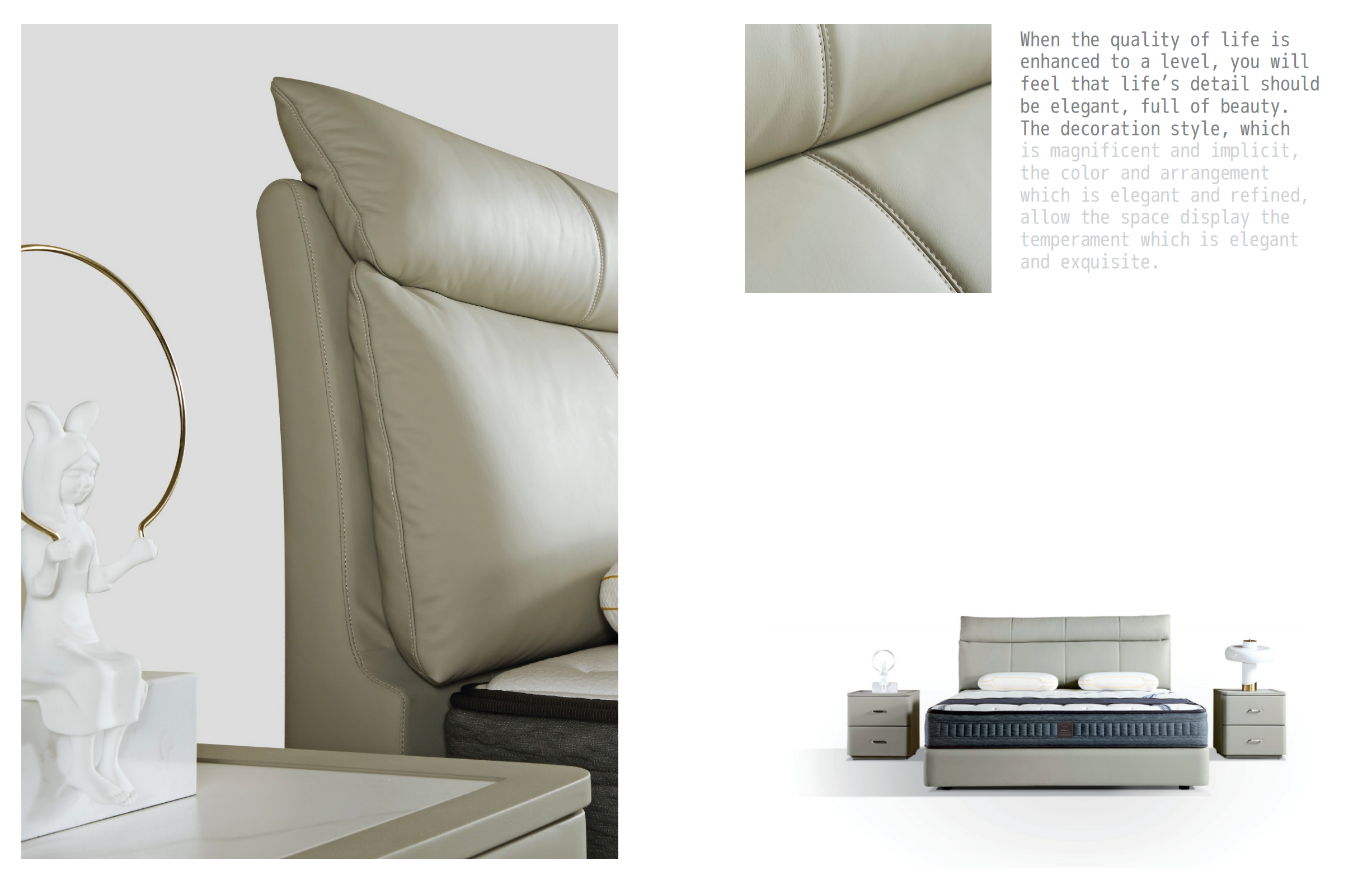
When purchasing a sofa, many people only focus on the appearance, but ignore the inner frame structure. The frame directly determines the stability and durability of the sofa. The most reliable frame material in the current industry is dry-processed hardwood, such as beech or birch. If the conditions permit, you can find an angle to see if the wood at the bottom of the sofa is smooth and free of scars, and whether the joints are mortise-and-tenon joints and reinforced with triangular wood, rather than simply fixed with a nail gun. The choice of spring system is also important. Snake springs and high-rebound sponges are a more mature combination.
A good frame should be quiet and not squeak when you sit down on the couch. You can try swaying slightly on the sofa seat, or lift a corner of the sofa to feel the weight. Be wary of sofas that are too light. They may have poor filling materials or sparse wooden frames inside. The craftsmanship standards of the bedding frame are also extended to the thinking of the seating system, because whether it is a bed or a sofa, a solid internal structure is the fundamental guarantee for a long-term comfortable experience.
The problem that many people encounter when purchasing a sofa is not that the style is poor, but that the size does not fit. Before purchasing, be sure to measure the length, width, and height of the placement space, and reserve distance for aisles. Usually, about 60 centimeters need to be left next to the single sofa to facilitate movement. Another tip is to don’t just look at the nominal size of the sofa. Since the width of the armrests and the thickness of the backrest are different, the actual space occupied is also different. It is best to draw a simple floor plan and put the sofa model into it to feel it.
First of all, the depth of the sofa is easily overlooked. As for Italian sofas, in order to pursue the graceful posture of sitting, generally, its depth is slightly shallower than that of ordinary sofas. But if you are used to sitting cross-legged at home, or half-lying there watching TV, then in this case, you may need to choose a style with a depth of more than 55 cm. If there are elderly people or children at home, it is best to choose a style with arc processing on the edges of the sofa to prevent strong right angles from causing collisions. Consider both the size of the space and your usage habits, so that you can choose a sofa that truly suits you.
In your opinion, when choosing a sofa, which one is more important, the high-end appearance or the actual sitting comfort? Welcome to leave your opinions in the comment area, and don’t forget to share this article with friends who are deeply confused about choosing a sofa.