Welcome to Melltorp's official website!
As consumers around the world continue to have higher requirements for the quality of home life, sofas are no longer just simple seats. They are core home products that incorporate ergonomics, smart technology and environmental protection concepts. In 2026, the international sofa industry will show the outstanding characteristics of material innovation, functional integration and deep integration of healthy design. This article will sort out the cutting-edge information and practical knowledge in the current sofa field for you from the four dimensions of material science, smart technology, purchase points and installation design.
In the EU and North American markets, the environmental standards for sofa fabrics and fillings are becoming more stringent year by year. More and more brands are beginning to purchase environmentally friendly fabrics made from recycled polyester and solid wood frames certified by the Forest Stewardship Council. For example, natural linen, organic cotton and wool blend fabrics are not only biodegradable, but also have excellent breathability and anti-allergic properties. In terms of filling materials, plant-based memory foam and latex are gradually replacing traditional sponges. The former is derived from renewable resources such as soybeans, while the latter has natural anti-mite and antibacterial properties. When purchasing, consumers can pay attention to the OEKO-TEX 100 certification or gold certification. These marks indicate that the product has undergone strict chemical substance testing. Moreover, modular design sofas are also highly regarded because the materials can be replaced and the parts can be recycled. It can effectively extend the product life cycle and reduce household waste.
The wave of smart homes has swept across the field of sofas. In the current international market, smart sofas mainly integrate three major systems, namely posture adaptive adjustment, somatosensory environment linkage, and health data monitoring. Posture adaptive adjustment uses a pressure sensor array embedded inside the seat cushion to detect the pressure distribution of the human body's sitting posture in real time, and automatically adjusts the hardness of the support area through micro air bags or mechanical structures. This technology is particularly effective in preventing lumbar spine diseases. Somatosensory environment linkage allows the sofa to be connected to indoor lighting, temperature control and sound systems, and automatically switch to movie watching or resting scene mode when the user sits down. There are more cutting-edge health monitoring functions that use non-contact sensors to analyze sitting time, respiratory rate, and even heart rate variability, and then use mobile applications to remind users to get up and move around, or record sleep quality. The British brand has invested in research and development in the field of smart bedding and sofas in recent years. It is committed to extending sleep monitoring technology to daily living scenarios, so that health management can seamlessly cover all times of the day.
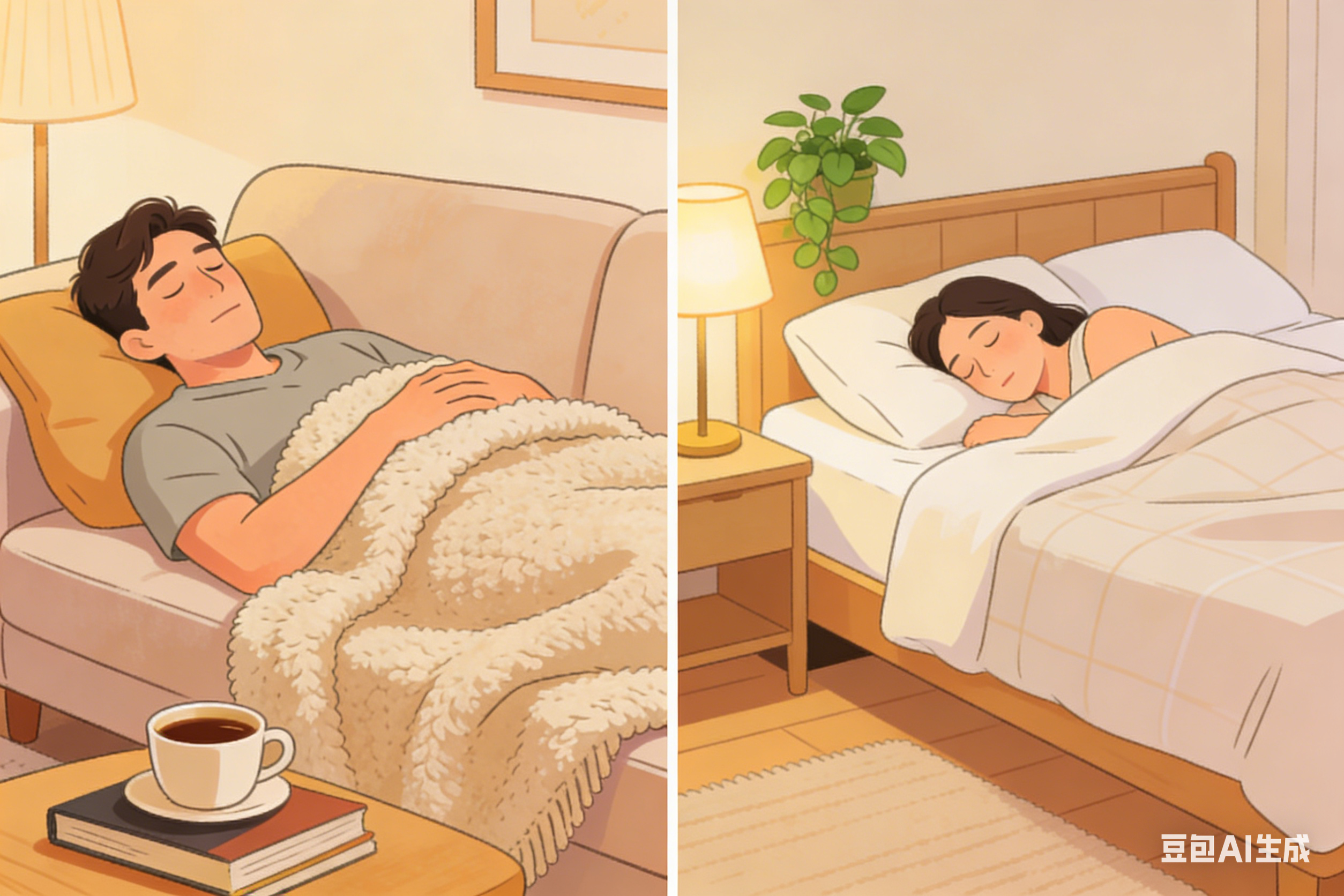
When choosing a sofa, consumers often care most about the two core factors of comfort and durability. Comfort is mainly determined by the combination of seat depth, seat height and backrest angle: users over 175cm tall are suitable for seat depths of 55 to 60cm, while elderly people are recommended to choose items with a seat height of 45cm or more and a backrest angle of 100° to 110° to facilitate sitting up. When it comes to durability, the spring system is the key to the evaluation. The combination of serpentine springs and independent pocket springs can not only provide long-lasting support, but also effectively reduce vibration transmission. Priority is given to kiln-dried hardwood (such as oak and birch) as the frame material. Metal frames with a wall thickness of no less than 1.5mm are suitable for large-span designs. The wear resistance of fabrics can refer to the Martindale test value: daily household use should reach more than 20,000 rpm. Families with pets are recommended to choose high-density woven fabrics or microfibers with a resistance of more than 40,000 rpm. In addition, the density of the cushion filling also needs to be paid attention to. The composite structure of high-density resilient sponge (density above 35kg/m³) and down layer can achieve a good balance between softness and support.
Many users ignore the installation details and space layout after buying a sofa, resulting in a significant reduction in user experience. First, measuring the dimensions of door frames, elevators and corridors is a necessary step before installation. The internationally accepted method is to first unpack and tilt the sofa through a narrow passage. For L-shaped or corner sofas, it is recommended to choose products that are transported in modular splits. The material of the floor will also have an impact on the stability of the sofa: environmentally friendly rubber gaskets need to be installed under the wooden floor to prevent metal feet from wearing down the floor; feet with anti-slip pads should be used in carpet areas. In terms of space design, the distance between the sofa and the TV in the living room must be determined according to the "diagonal multiple rule", that is, the viewing distance is at least 1.5 times the diagonal length of the screen, and a 35 to 45 cm channel should be left between the sofa and the coffee table, so that it is convenient to move around and to easily access items. For small apartments, choose a footstool with storage function or a sofa with a hollow bottom design (more than 15 cm above the ground), which can allow the sweeping robot to shuttle freely while increasing storage space. In terms of lighting arrangement, installing adjustable-angle spotlights or wall lamps above both sides of the sofa can effectively reduce shadow interference when reading, thereby improving the comfort of the room.
The European Home Furnishing Show in the first quarter of 2026 revealed a clear signal that sustainability and circular economy models have become the growth engines of the sofa industry. France and Germany have successively introduced "Furniture Repairability Index" regulations, requiring brands to indicate the number of dismantling parts of the product, the supply period of repair parts, and how to obtain online repair manuals when selling. This policy directly promoted the transformation of sofa design from one-time consumption to modular and standardized, such as uniform screw interfaces, replaceable cushion covers, and independent backrest modules. During the same period, sofa rental services have rapidly emerged among young people. They pay a monthly fee to replace sofas with different colors or functions. After use, the brand will recycle, renovate and recycle the sofa, which greatly reduces resource consumption. The British brand is in line with this trend and has implemented a trade-in program on its official website in the UK. It recombines sponges obtained from recycled sofas into sound insulation panels, smelts metal parts and reuses them, and processes fabrics into cleaning fiber cloths to effectively achieve full life cycle management. These practices indicate that the sofa industry will value use value rather than ownership in the future, and technological innovation and environmental responsibility will jointly define the market structure in the next ten years.
When choosing a sofa, what do you pay most attention to: technological functions, environmentally friendly materials, or classic design? Welcome to share your opinions in the comment area, and like and forward this article to let more friends know the cutting-edge information of the international sofa industry.